Institute for Agricultural Research,
Ahmadu Bello University,
P.M.B 1044
Zaria.

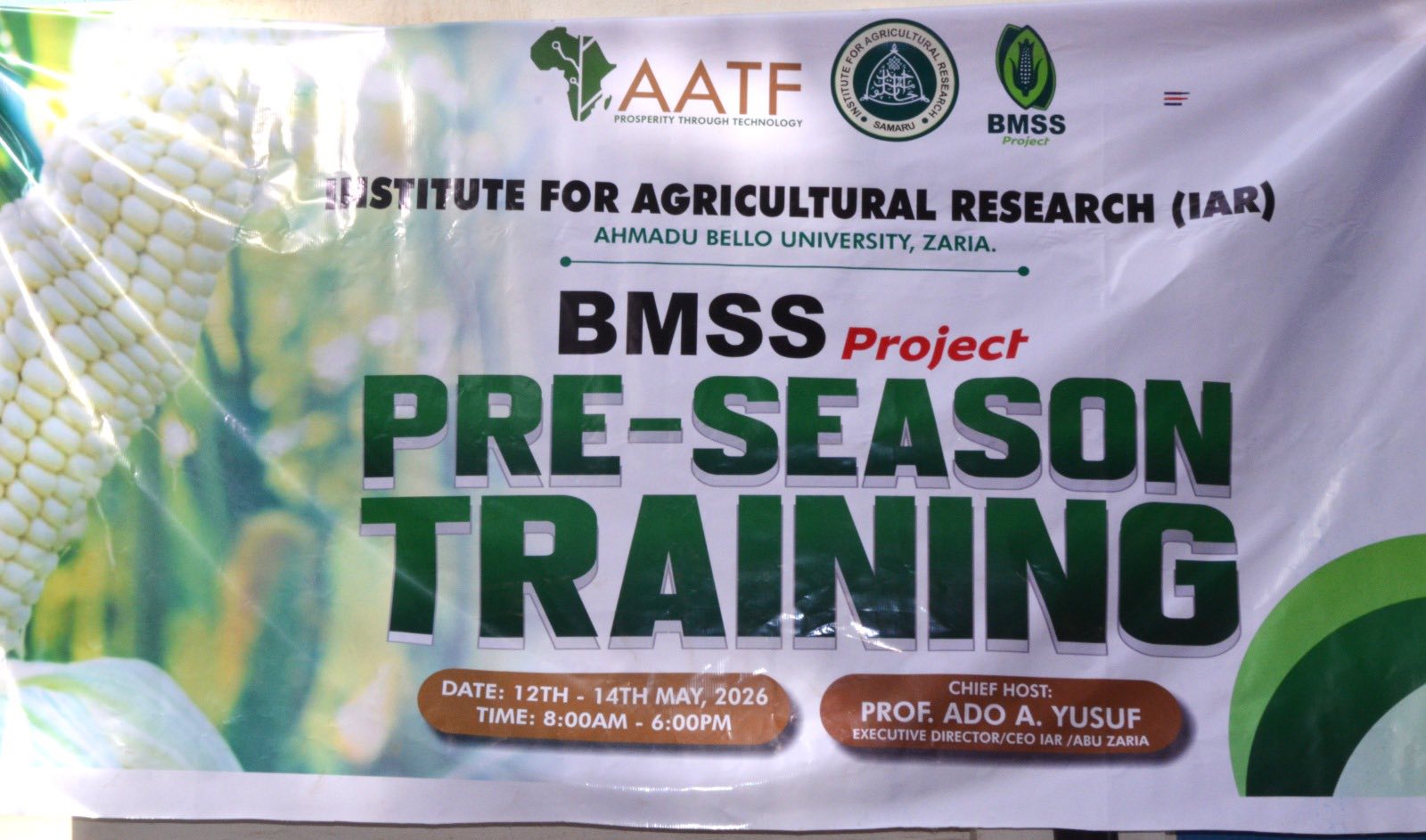
The
Institute for Agricultural Research (IAR), Ahmadu Bello University, Zaria, in
collaboration with the African Agricultural Technology Foundation (AATF) and
the BMSS Project, has successfully commenced the 2026 Pre-Season Training for
Farmers, Extension Agents and Technicians aimed at strengthening maize
production and improving sustainable agricultural practices across Nigeria.
The
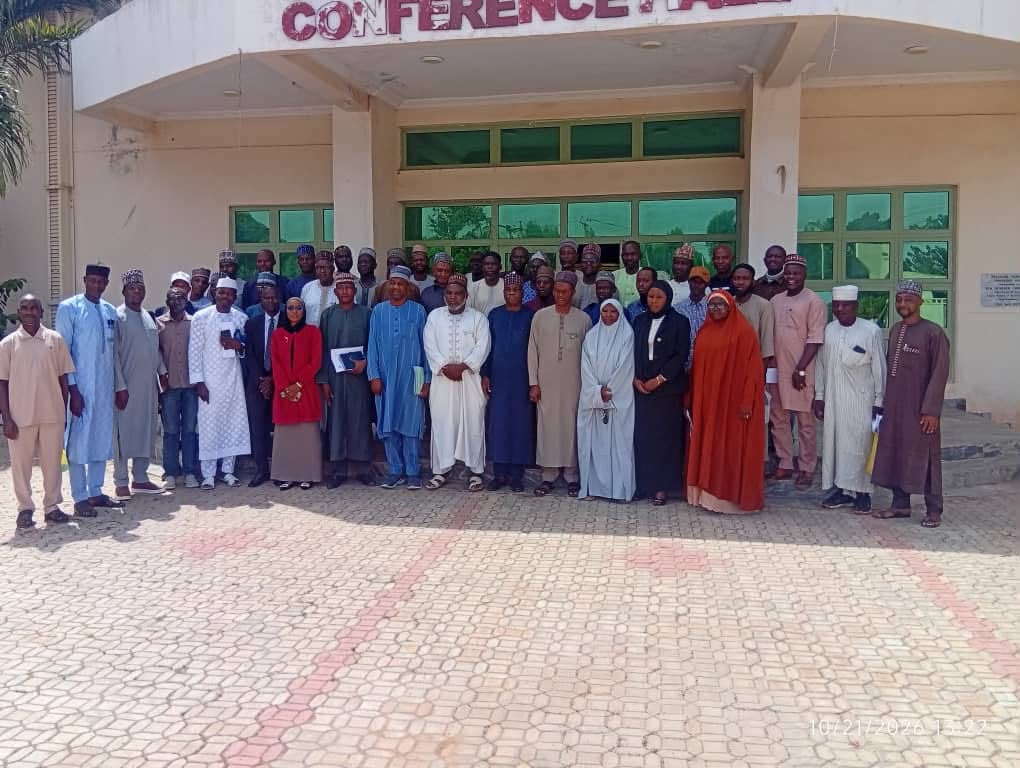
two-day training programme, which began on Tuesday, 12th May 2026, brought
together participants from different states across the country, including
farmers, researchers, extension agents, and technicians, all committed to
improving maize productivity through modern agronomic practices and effective
pest management strategies.
The
programme commenced with opening prayers and self-introductions, creating an
avenue for participants to interact, exchange experiences, and strengthen
collaboration among stakeholders in the maize value chain.
In
his welcome remarks, the BMSS Principal Investigator, Prof. R. S. Adamu, expressed
appreciation for the impressive turnout despite the short notice given before
the programme. He emphasized that the training was carefully designed to
strengthen maize cultivation, particularly in Northern Nigeria, through
improved agronomic practices, proper management of insect pests and diseases,
and effective Tela Maize stewardship practices.
The
Executive Director of IAR, Prof. Ado Yusuf, represented by the Assistant
Director Research, Prof. L. J. Bamaiyi, described the training as timely and strategic,
especially as farmers and agricultural stakeholders prepare for the 2026
cropping season. He encouraged participants to actively engage in the sessions
and take advantage of the opportunity to acquire practical and scientific
knowledge capable of improving crop establishment and yield.
The
meeting featured several technical presentations delivered by prominent
scientists and experts in the field of maize production and crop management.
Prof.
A. I. Sharifai delivered a presentation on “Good Agronomic Practices for
Improved Maize Productivity,” where participants were taken through important
practices such as land preparation, seed selection, planting methods,
fertilizer application, weed management, and general crop management strategies
necessary for successful maize production.
This
was followed by a presentation by Prof. M. Oyekunle on “Management of
On-Station and On-Farm Trials: Key Expectations.” He highlighted the importance
of proper field trial management and accurate data collection in generating
reliable research results and informed agricultural decisions.
Prof.
R. S. Adamu also presented on “Management of Key Insect Pests and Diseases of
Maize,” where participants were educated on the identification, prevention, and
management of major pests and diseases affecting maize production.
Another
important session was delivered by Prof. M. M. Abdulmalik, who spoke on
“Drought and Its Effects on Maize Productivity.” The presentation focused on
the impact of drought stress on maize growth and practical strategies farmers
can adopt to minimize yield losses under changing climatic conditions.
Participants
were further exposed to the processes involved in hybrid maize seed production
through a presentation by Dr. H. Abubakar on “Maize Hybrid Production.”
The
final technical presentation of the day was delivered by Dr. M. S. Usman on
“Insect Pest Resistance Management in Tela Maize Stewardship.” The session
emphasized the importance of proper stewardship practices, monitoring of pest
populations, and sustainable management strategies to maintain the
effectiveness of insect-resistant Tela Maize technology.
A
major highlight of the training was the highly interactive question-and-answer
session, where participants raised practical questions and shared field
experiences. The discussions provided valuable clarifications and reinforced
the importance of adhering to sound research principles, effective monitoring
practices, proper seed storage, pest surveillance, and accurate data
collection.
The
first day of the training ended successfully, with participants expressing
satisfaction with the quality of the presentations and the knowledge gained
from the sessions.
The
programme is expected to continue with practical field sessions and visits to
Tela Maize demonstration plots, where participants will gain hands-on
experience to complement the classroom-based discussions.
 At
IAR, we remain committed to strengthening agricultural productivity through
research, innovation, capacity building, and sustainable technology
dissemination.
At
IAR, we remain committed to strengthening agricultural productivity through
research, innovation, capacity building, and sustainable technology
dissemination.
#IARABUZaria #BMSSProject #AATF #TelaMaize #AgriculturalResearch #FoodSecurity #CapacityBuilding #ABUZaria

Share This News