Institute for Agricultural Research,
Ahmadu Bello University,
P.M.B 1044
Zaria.

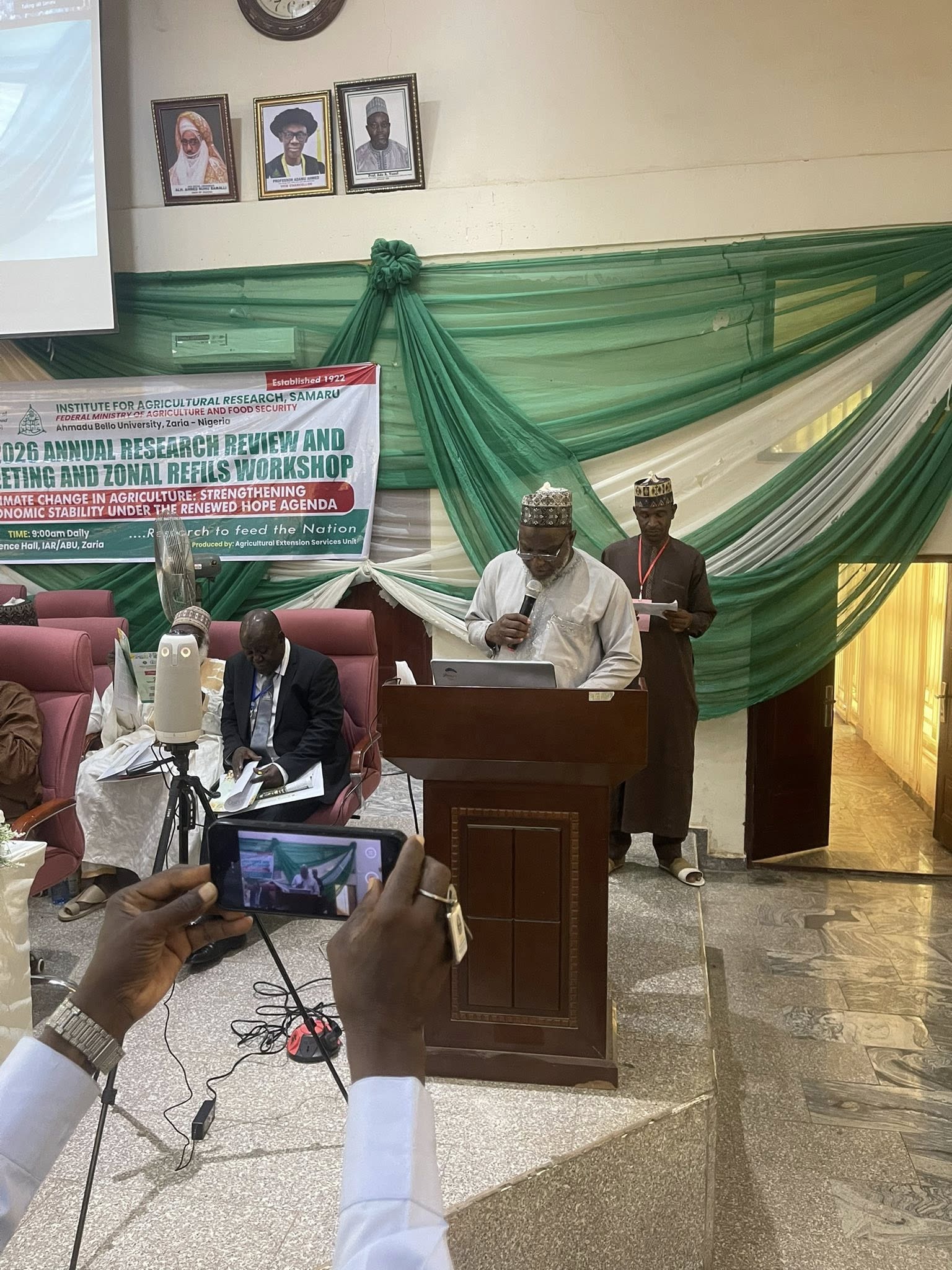
The Institute for Agricultural Research (IAR), Ahmadu Bello
University, Zaria, in collaboration with the Federal Ministry of Agriculture
and Food Security, has successfully commenced its 2026 Annual Research Review
and Planning Meeting and Zonal REFILS Workshop, held from 28th–29th April 2026.
This year’s meeting is held under the compelling theme:
“Mainstreaming
Climate Change in Agriculture: Strengthening Food Security and Economic
Stability under the Renewed Hope Agenda.”
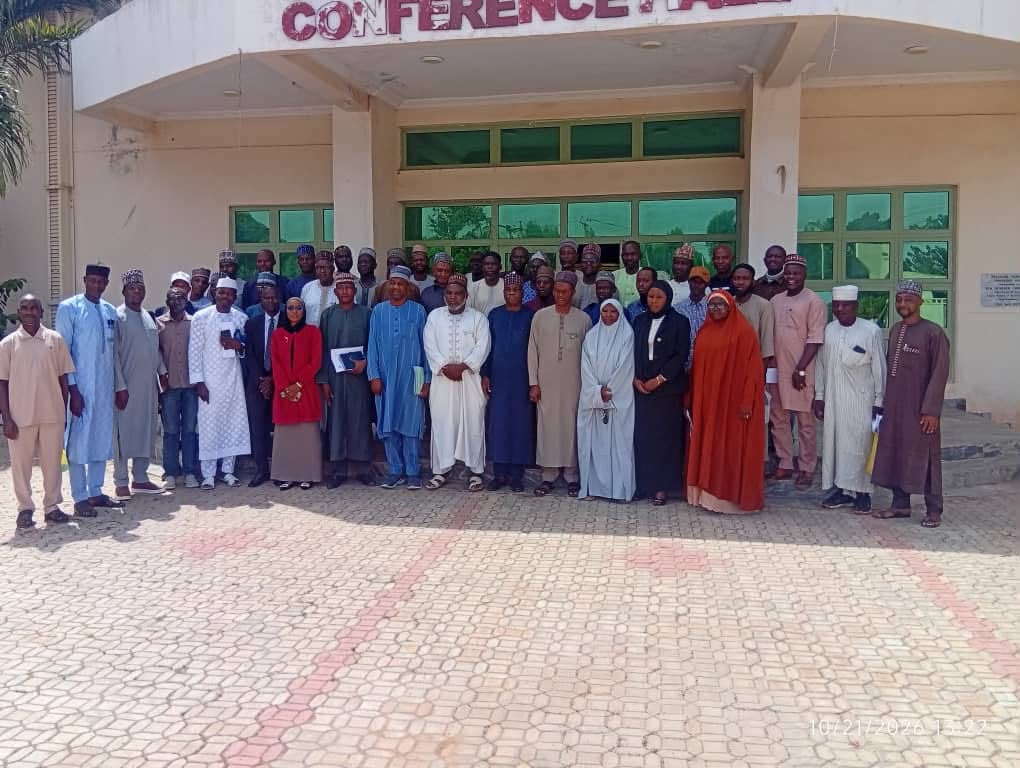
The event brought together a wide spectrum of stakeholders in
Nigeria’s agricultural sector, including researchers, extension professionals,
policymakers, development partners, and institutional leaders, all committed to
strengthening agricultural resilience and national food security.
The opening ceremony witnessed the presence of several
distinguished personalities. The Vice-Chancellor of Ahmadu Bello University,
Prof. Ahmed Adamu, was represented by the Deputy Vice-Chancellor
(Administration), Prof. Bello Sabo. Also in attendance was the Executive
Secretary of the Agricultural Research Council of Nigeria (ARCN), Dr. Adamu
Abubakar Dabban, represented by Hajiya Buba Hajara. The traditional institution
was equally represented as His Royal Highness, Ahmad Nuhu Bamalli, the Emir of
Zazzau, was represented by the Madakin Gonar Zazzau, Alhaji Musa Ibrahim.
The gathering also attracted Directors from sister institutes,
including the Division of Agricultural Colleges (DAC), National Agricultural
Extension and Research Liaison Services (NAERLS), and the National Animal
Production Research Institute (NAPRI), alongside prominent Directors from
Ahmadu Bello University, principal officers, researchers, and invited guests.
In his opening remarks, the Director of IAR, represented by
Prof. Nafi’u Abdu, reaffirmed the Institute’s unwavering commitment to
developing climate-resilient agricultural technologies capable of addressing
emerging challenges in Nigeria’s farming systems. He highlighted that the
Institute has consistently released improved crop varieties adapted to diverse
agro-ecological zones, many of which are drought tolerant, pest and disease
resistant, and capable of increasing yields by up to 100 percent.
He further revealed that the Institute currently manages over
140 ongoing research activities and recently introduced 19 new research
projects. These achievements have been complemented by improvements in research
infrastructure, staff capacity development, and the integration of solar energy
systems to support sustainable research operations.
Declaring the meeting open, the Vice-Chancellor, represented by
Prof. Bello Sabo, described the theme of the meeting as highly timely and
strategic, especially in the face of the increasing impact of climate change on
agricultural productivity. He called on researchers and stakeholders to focus
on solution-oriented research capable of ensuring food sufficiency, reducing
hunger, and improving farmers’ livelihoods.
He also commended the Institute for sustaining its legacy of
research excellence and noted with pride the recent approval of more than 20
new crop varieties developed by IAR, emphasizing that the strong linkage
between research, teaching, and farmers remains a critical model for
agricultural development in Nigeria.
Goodwill messages were delivered by collaborating institutions
and partners, all reaffirming their commitment to supporting agricultural
research, innovation, and technology dissemination.
The keynote address, delivered on behalf of the Director General
of KASITDA, Dr. Bashir Abdu Muzzakari, by Ahmad Idris, emphasized the urgent
need to integrate climate change considerations into agricultural systems in
order to enhance resilience, productivity, and sustainability across Nigeria’s
agricultural value chains.
The event also featured presentations by Programme Leaders,
Heads of Units, and Partner Organizations (ICRISAT, NAPRI and NAERLS), who
reviewed research achievements and outlined strategic plans for the upcoming
farming season.
The meeting continues tomorrow with the Zonal REFILS Workshop,
which is expected to further strengthen the linkage between research, extension
services, and farmers, ensuring that innovations developed by research
institutions are effectively disseminated and adopted at the grassroots level.
 At
IAR, we remain committed to advancing research, driving innovation, and
developing climate-smart solutions that secure Nigeria’s agricultural future.
At
IAR, we remain committed to advancing research, driving innovation, and
developing climate-smart solutions that secure Nigeria’s agricultural future.
#IARABUZaria #AgriculturalResearch #ClimateSmartAgriculture #FoodSecurity #REFILS #ABU

Share This News