Institute for Agricultural Research,
Ahmadu Bello University,
P.M.B 1044
Zaria.

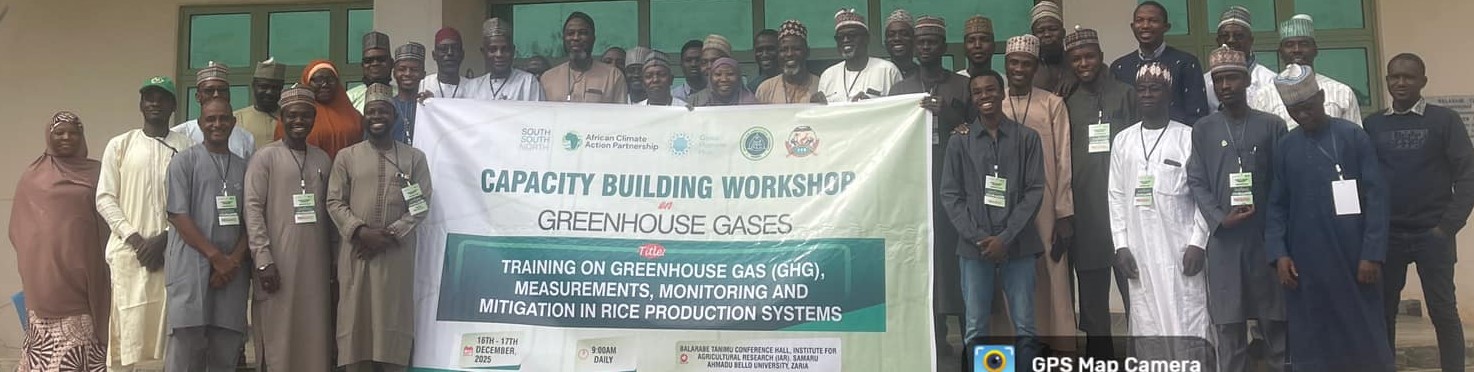
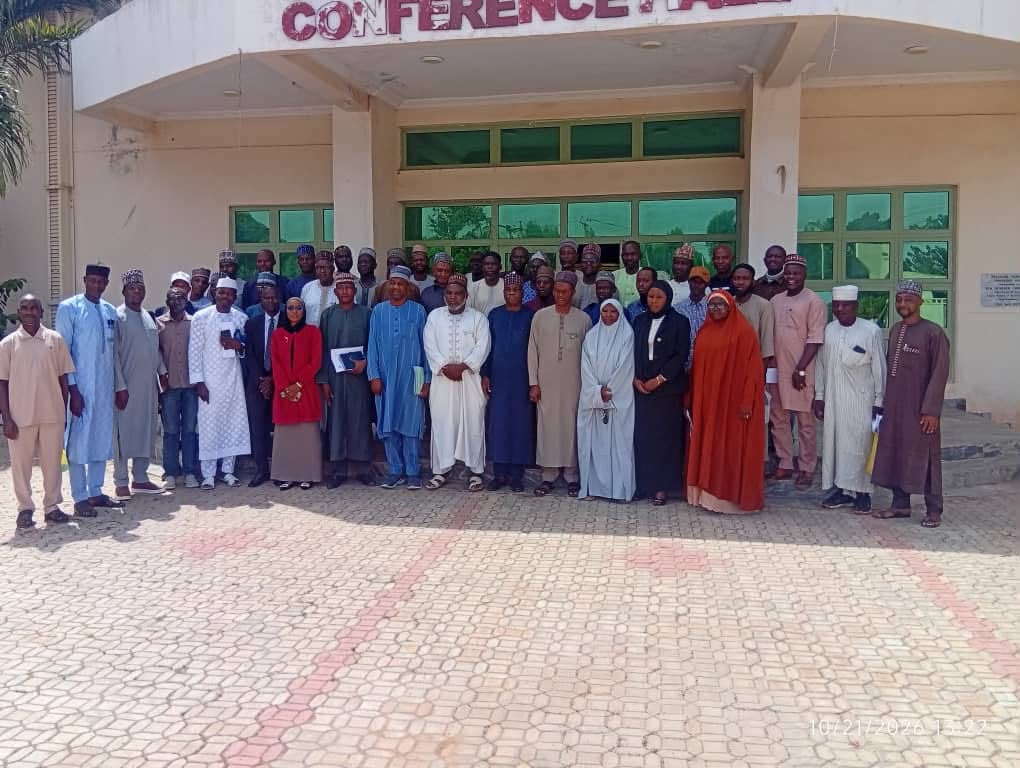
The SSN-RICE–IAR-GHG Project of the Institute for Agricultural Research (IAR), Ahmadu Bello University (ABU), Zaria, in collaboration with the Federal University Dutse, has successfully organized a two-day capacity building workshop titled “Training on Greenhouse Gases Measurement, Monitoring and Mitigation in Rice Production Systems.” The workshop is taking place from Tuesday, 16th to Wednesday, 17th December 2025, at the Balarabe Tanimu Conference Hall, IAR Samaru.
The training is supported by key partners, including the African
Climate Action Partnership, South South North and the Global Methane Hub,
reflecting strong multi-institutional commitment to addressing climate change
challenges in agriculture, particularly within rice-based production systems.
In his opening remarks, the Executive Director, Prof. Ado Yusuf,
who was ably represented by Assistant Director Research Prof. L. J. Bamaiyi,
emphasized the critical importance of accurately quantifying greenhouse gas
emissions from rice production systems. He noted that reliable and
context-specific data are essential for developing effective mitigation
strategies and advancing climate-smart agriculture. He encouraged participants
to fully engage in the sessions and to step down the knowledge and skills
acquired to colleagues and other stakeholders who could not attend the
training.
The programme was further honored by the presence of key senior
officers and experts, including Prof. A. I. Sharifai, Assistant Director,
Extension, Monitoring and Evaluation; Prof. S. B. Abdu, Faculty of Agriculture
Dean; Prof. A. A. Muhammad, Head of the Department of Agronomy; Prof. A. S.
Isah, Programme Leader, Farming Systems, and the Project Lead Prof. A.
Abdulkadir, among others.
Following the opening session, participants were taken through a
series of rich technical presentations focusing on greenhouse gas emissions in
agriculture, with particular emphasis on rice production systems. Topics
covered included climate change and rice production, mechanisms of greenhouse
gas emissions and mitigation options such as Alternate Wetting and Drying
(AWD), tools for estimating emissions under different mitigation practices,
greenhouse gas measurement technologies and IPCC guidelines, as well as
hands-on field demonstrations on chamber installation, gas sampling procedures,
and water level measurement techniques.
These sessions provided participants with a strong blend of
theoretical knowledge and practical skills necessary for effective greenhouse
gas measurement, monitoring, and mitigation in rice production systems.
The workshop continues tomorrow with sessions dedicated to
laboratory analytics, data analysis, and application, equipping participants
with practical competencies in greenhouse gas calculations, emission
estimation, and the use of analytical tools. This will further strengthen their
capacity to generate reliable data for informed decision-making and the
development of effective mitigation strategies in rice production systems.
This initiative underscores IAR’s commitment to climate-smart
agriculture, sustainable rice production, and evidence-based solutions for
reducing agriculture-related greenhouse gas emissions in Nigeria and beyond.
#IAR #ABU #RiceResearch #ClimateSmartAgriculture
#GreenhouseGases #GHGMitigation #SustainableAgriculture #ClimateAction
#AgriculturalResearch #RiceProduction

Share This News